Posts

Showing posts with the label journal of materials in civil engineering asce

Carbonation Processing and Characterization of Fly Ash-Portlandite Blends as Cement-Free Binding Agents

  Abstract Carbonation of fly ash mortars augmented with portlandite (CH) under ambient conditions to produce cement-free binding agents that sequester CO 2  is discussed. Fly ash-CH blends are proportioned to produce shape-stable mixtures that can be conventionally cast or extruded. The strength and CO 2  uptake are noted to strongly depend on specimen saturation. High-Ca fly ash blended with 10% CH (by mass) results in a 7-day compressive strength of more than 35 MPa when carbonated, which is ~40% higher than that of the conventionally cured mixture, and a CO 2  uptake of ~8% by mass of the binder. Low-Ca fly ash blended with 30% CH results in 15 MPa strength, which is 3 times higher than that of the conventionally cured mixture, and a CO 2  uptake of ~16% by mass of the binder. The proportion of initial voids that remain after carbonation or conventional curing, which scales well with compressive strength, is shown to be a convenient measure to quantify the r...
Vesicular Material for Reducing Expansion of Soils

  Abstract Soils with expansion problems have volumetric deformations due to changes in its humidity. There are several soil improvement techniques that consist of materials that react chemically with clay soil or materials that encapsulate the clays to isolate them from water. This work presents a physical alternative based on the use of natural vesicular materials to reduce the change in soil volume. It is concluded that the decrease in expansion of soils using natural void structures like scoria depend on its amount of void volume. This study showed that the volume corresponding to the decrease in expansion required in a soil is equivalent to approximately half of its hollow volume within the soil. Read More about this article: https://irispublishers.com/ctcse/fulltext/vesicular-material-for-reducing-expansion-of-soils.ID.000679.php Read More about Iris Publishers Google scholar Articles : https://scholar.google.com/citations?view_op=view_citation&hl=en&user=...

Response Modal Nonlinear Time-History Dynamic Analyses of the Northridge Earthquake of a Two- Storied Steel Structure with Rubber Isolator and Fixed-base Systems

  Abstract This paper analyzes and compares the responses of a two-storied steel structure to the 1994 Northridge earthquake in California. Response modal nonlinear time-history dynamic analysis was especially used on the structure with fixed-base and base-isolated systems to show the realistic behavior of the structure. Intuitively, the best choice for the seismic isolation technique is the use of the flexible element, or an isolator, at the structure’s base, which ensures damping. The current research analyzed in depth the application of a base isolator in the structure. In this study, one structure with different support systems was analyzed to investigate the use of base isolation. The research compared the features and performance of a structure with and without base isolation. The steel building was analyzed subjected to earthquake-induced load with and without a base-isolated rubber bearing. The building was modeled by SAP2000 for nonlinear time-history analysis. Ground-moti...

Response of Coupled Power Transmission Tower Line Systems Subjected to Blast Loads

  Abstract A study on the effects of blast loads on tower-line coupling, single tower structure and tower-line structure system has been conducted and a variety of structural response variables have been compared. The modular and powerful finite element analysis software Dlubal- RFEM has been utilized for the blast-oriented linear implicit dynamic analysis of latticed transmission line structures covered in this study. The transient dynamic equilibrium equations of the tower have been directly solved by Newmark time integration method. Several study models from this work have indicated that there is up to nearly four-fold increase in support forces in uncoupled systems which subsequently greatly influence the planning, selection, design and detailing of support systems for such structures. Read More about this article: https://irispublishers.com/ctcse/fulltext/response-of-coupled-power-transmission-tower-line-systems-subjected-to-blast-loads.ID.000684.php Read More about Iri...

Installation of Pit Fencing in Cramped Conditions

 Abstract  Construction of facilities in cramped conditions is always a complex geotechnical problem associated with ensuring the basal emergency operation of buildings and structures of the surrounding buildings. In the arsenal of geotechnicians, a great potential of geotechnical technologies for the installation of pit fences has been accumulated. Often, not everyone is suitable for the conditions of their use in cramped conditions. The most suitable technologies for such cases are the drilled wells used (wells for drill piles and soil anchors) with their subsequent filling with concrete and at the same time not disturbing the stress-strain state of the surrounding soil. The use of drilling piles and soil anchors arranged using electric discharge technology (ERT technology) in many cases successfully solves the problem of construction in cramped conditions. The article cites one of the geotechnical cases of fencing the pit in particularly cramped conditions. The work is an o...

A Systematic Review of Existing Methods plus the State-of-the-art Technologies Used to Collect Road-Related Data and its Usage

  Abstract Road networks are an essential component of infrastructure. In order to improve the performance of road networks, the existing (business as usual) data collection methods are critical for management staff. However, with the development of big data and technologies, advanced devices and analysis methods appeared in research area and industries. These technologies are more cost-efficient and intelligent to collect and analyze data. Therefore, there is a need to review the existing data collection methods and explore the state-of-the-art technologies regarding data gathering to figure out how best they can be used. This systematic review has been conducted to identify the technologies and data usage by answering two primary questions: 1) What is the evidence to support the use of existing data collection methods for the road sector? 2) What is the evidence to support the state-of-the-art technologies being used for road-related data collection and analysis? There is suffici...

TS3 – A New Technology for Efficient Timber Structures

  Abstract Until today, all known timber building systems allow only slabs with a uniaxial load bearing action. In the framework of a large research project a new timber slab system has been developed and already tested in first real applications. The developed slab system is designed for housing, commercial and industrial buildings. The slab system works as a flat slab carrying vertical loads biaxial and consists of timber slab elements like CLT glued together on site with a high performing butt-joint bonding technology. This technology was called Timber structures 3.0 (TS3). Several research and tests about the performance of the different slab elements and the butt-joint bonding have been performed. First structures have been built and proof the system. Read More about this article:  https://irispublishers.com/ctcse/fulltext/ts3-a-new-technology-for-efficient-timber-structures.ID.000592.php Read More about Iris Publishers Google scholar Articles :  https://scholar.go...

Subdomain Method for Layout Optimization of Piles in a Composite Pile Foundation

  Abstract Based on continuum topology optimization, a subdomain approach for achieving optimal pile layout in a composite pile foundation (CPF) is presented. In general, the computational time is excessively long when the span of a CPF is far greater than the depth of pile and the nonlinearity of soils and soil-pile contact are considered. To reduce computational time, we suggest dividing the original pile foundation into a number of subdomains. Only a few representative subdomains (RSs), such as the corner representative subdomain (CRS), side representative subdomain (SRS), and inner representative subdomain (IRS), are required to find the optimal pile layout through topology optimization. In optimization, the pile volumes, maximum settlement, and settlement uniformity of foundation surface are considered simultaneously. Numerical experiments are presented, and the validity of the algorithm is verified. In the present method, a CPF with an initial uniform layout of piles of the s...

Iris Publishers- Peer Review Journal of Civil and Structural Engineering

Image
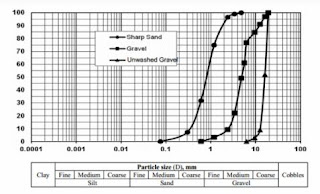
   Iris Publishers - Peer Review Journal of Civil and Structural Engineering Proportional Examination of Pf Mechanical Composition of Concrete Produced with Washed and Unwashed Gravel Abstract Concrete is a very important material in the Nigerian construction industry as over 90% of her storey buildings are made from reinforced concrete. Local gravel is being increasingly used as coarse aggregate in place of the more expensive crushed granite in the production of concrete in parts of the country where it is found. Hence, this study aims at comparing the mechanical properties of concrete produced with washed and unwashed gravel to identify the most suitable aggregate for concrete. The use of two types of course aggregates for different works is examined in this study. Typical strength concrete is being made from various aggregates and their impact on various characteristics to the subsequent concrete. Compressive strength is the most vital property of concrete. In this paper, t...

Iris Publishers- Open Access Journal of Civil and Structural Engineering

Image
  Iris Publishers - Open Access Journal of Civil and Structural Engineering Finite Element Analyses in the Tunnel: An Overview Abstract With the development of the world and human beings’ rush to get somewhere, the need for tunneling has increased. Solutions have been made with the methods of end-to-end elements searched for a more straightforward resolution and visual thinking of tunnel projects that are complex and difficult to foresee. Thanks to these methods, geotechnical problems have been more easily detecting, and solutions have been producing in a short time. Several finite element methods have been developed in line with technology development and research. In this study, Plaxis, Flac, ABAQUS, Diana, Midas GTS NX programs, which are some of these programs, were briefly introduced, and tunnel projects solved with the mentioned programs were given Keywords: Finite element method; Tunnel project; Plaxis 2D/3D; Flac 2D/3D; Geotechnical Introduction The finite element method is...